This week in AP Biology, we covered structures of cells, organelles within the cell, and cell transport.
The basic support for the cell is made up of microtubules, microfilaments, and intermediate microfilaments, which is called the cytoskeleton. The cytoskeleton has the functions of cell shape, anchorage of organelles, regulations of cell and organelle motility, transportation, and movement of the cell through space.
We also looked up information about the different organelles, including their size, structure, function, and where they are found.
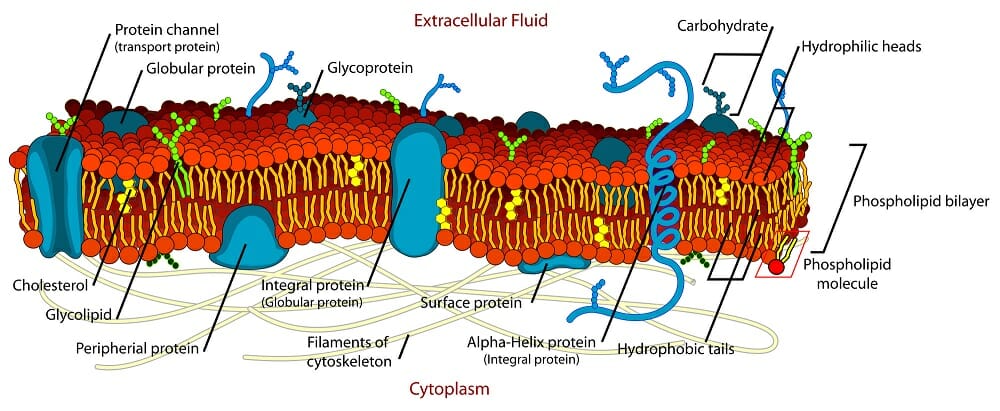
The cell membrane acts as boundary for the cell. Then we can talk about the plant cell having a cell wall. It is only present to maintain structure. Humans don’t have these because our cells require movement, and cells can be stiff.
Lastly, we discussed cell transport. Within cell transport, there is passive transport as well as active transport. We looked at examples of both of these. This week’s topics relate mostly to Big Idea 2 due to the constant movement of molecules across certain membranes.
This week I was curious and did not understand how cells really link, but now I understand that there is so much support that goes into making a cell come together.
This week in AP Bio we learned about carbon and macromolecules.
Lecture: Carbon
Carbon is tetravalent
It makes 4 bonds to get stable which leads to infinite variety
There is nothing special about life’s building blocks
Vitalism: belief in life force
Mechanism: theory that there is nothing special about how life is built
Isomerism
Isomers: molecules with the same molecular formula but different structures
3 kinds
Structural: same formula, different order
cis-trans: same formula, different positioning around double bond
Enantiomers: same formula, mirror image positioning around a central carbon
Biological systems tend to use only one of any 2 enantiomeric forms.
Lecture: Macromolecules
Big! Hence “macro.”
Made up of a few, common atoms
Accomplish all life functions
4 Main Kinds
carbohydrates
lipids
proteins
nucleic acids
Building Macromolecules
exist in 2 forms
monomers: simplest
polymers: a large molecule made of repeating monomers
Dehydration synthesis
Builds more complex molecules
Water is produced
Builds Complexity
Requires energy and enzymes
Hydrolysis
Reverse dehydration synthesis
Lysis: breaking
Water is needed
Reduces complexity (Catabolic)
Releases energy (Exergonic)
Enzymes required
Monosaccharides and Disaccharides
Major carbohydrates used for energy
Polysaccharides
Energy Storage
Amino Acids
21 total known
Every amino acid differs in structure. Structure of the R group varies widely.
Primary Structures
the sequence of amino acids in one polypeptide chain
Secondary Structure
regular, repeating 3D structures found in all polypeptide chains
Tertiary Structure
The specific 3D shape of a particular polypeptide chain aka the “conformation”
Quartenary Structure
The specific 3D shape of any protein that is made of more than one polypeptide chain
Proteins are responsible for all life related cells.
Hemoglobin: Carries oxygen in red blood cells
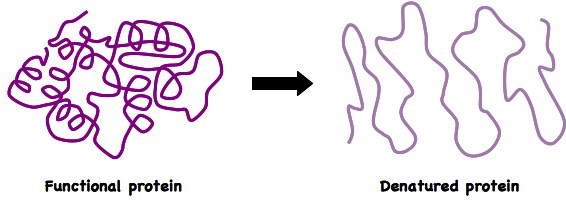
Denaturation
change in the structure of a protein
Questions/ Reflections
I wouldn’t say this week has to relate to any of the big ideas directly, but will help with understanding big idea 2, including “All living systems require constant input of free energy *constant input of energy is necessary for full function of a system.”
This week in AP Bio we started chapter 2 which is on chemistry. Most of it was review and we talked about energy, atoms, bonds, and water polarity. This connects with Big Idea 2.B, which states “Growth, reproduction and dynamic homeostasis require that cell create and maintain internal environments that are different from their external environments.”
Lecture: Bio- Chemistry
Energy and Atoms
Atoms: the smallest fundamental unit of matter.
120 different kinds of atoms (“elements”)
Biology is made up of 4 major, 10 minor.
Energy interacts with atoms in different ways.
Holds e-‘s to nucleus
When atoms absorb energy, e-‘s move to higher energy levels
The movement of e-‘s back to lower energy levels releases energy.
Atoms Bond
Bonding is accomplished by electrons interacting between atoms due to valence considerations. Two major kinds of bonds hold atoms together.
Ionic bond
Transfer of e-‘s
Not many combinations.
Example is salt, or, NaCl.
Covalent bond
Sharing of e-‘s
Infinite combinations
All important biological molecules are covalently bonded.
Example is glucose and DNA
Not all Bonds are created equal.
Polarity: the unequal sharing of electrons in a covalent bond leads to unequal distribution of charge in molecule. Polar molecules are attracted to other polar molecules.
Hydrogen Bonds: The strongest attraction between most polar molecules. Common in biological systems.
Bonds determine shape.
Shape is important.
Structure and function closely related.
All chemical reactions result in breaking and forming bonds. In any reaction, mass, energy, and charge are conserved.
2H2 O2 = H20
Compounds and Emergence
The properties of a compound can be very different from properties of elements that make them.
Emergence: Increasing levels of complexity in a system can demonstrate novel properties not seen in the levels below them.
Example: Salt
Radioactivity
Atoms with unstable nuclei are “radioactive.”
Emit high energy particles until stability is reached.
Big Questions
Why is water such a big deal?
In our bodies, we are water
Earth has water
Unique properties such as polarity and hydrogen bonds.
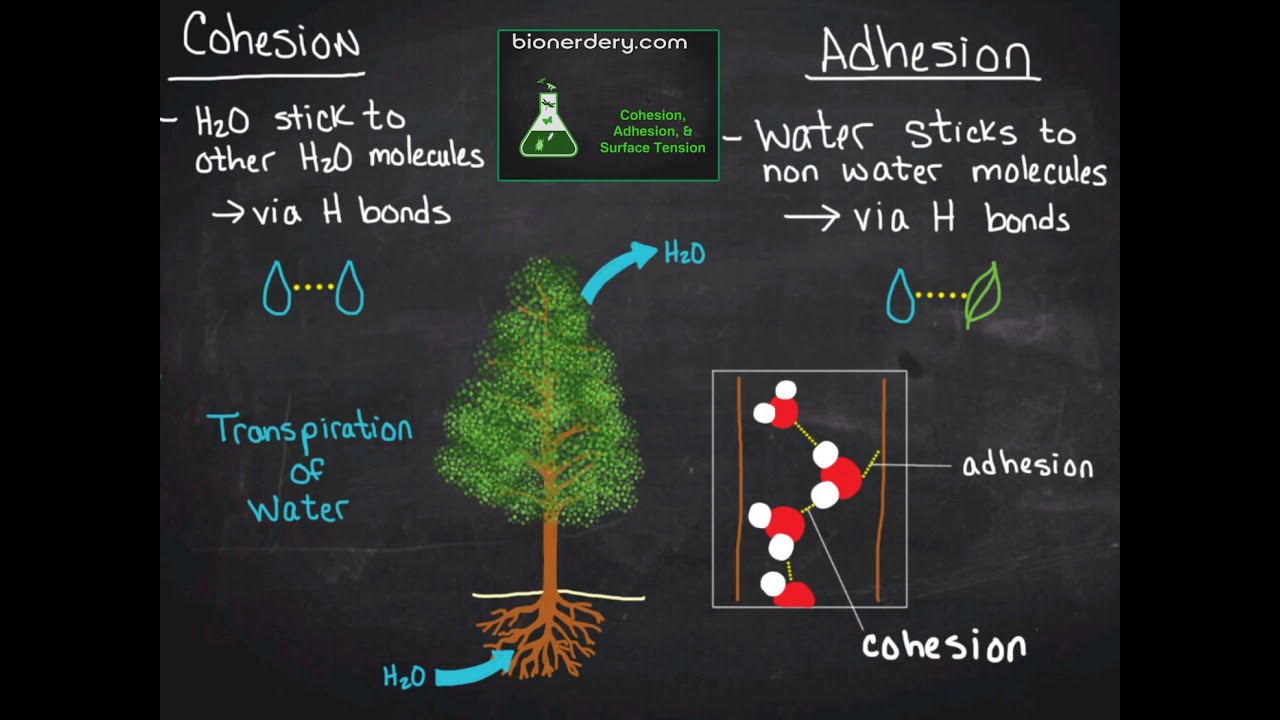
Cohesion: sticking together
Adhesion: Sticking to other things
Water is both cohesive and adhesive, which gives water high surface tension.
A High Specific Heat
Specific heat: How much heat is absorbed/ released before an increase/ decrease in temperature.
There is no universal solvent but water comes close.
Reflection/ Questions
How does the cohesion and adhesion of water help us?
Are there other solvents that are as good/universal as water?
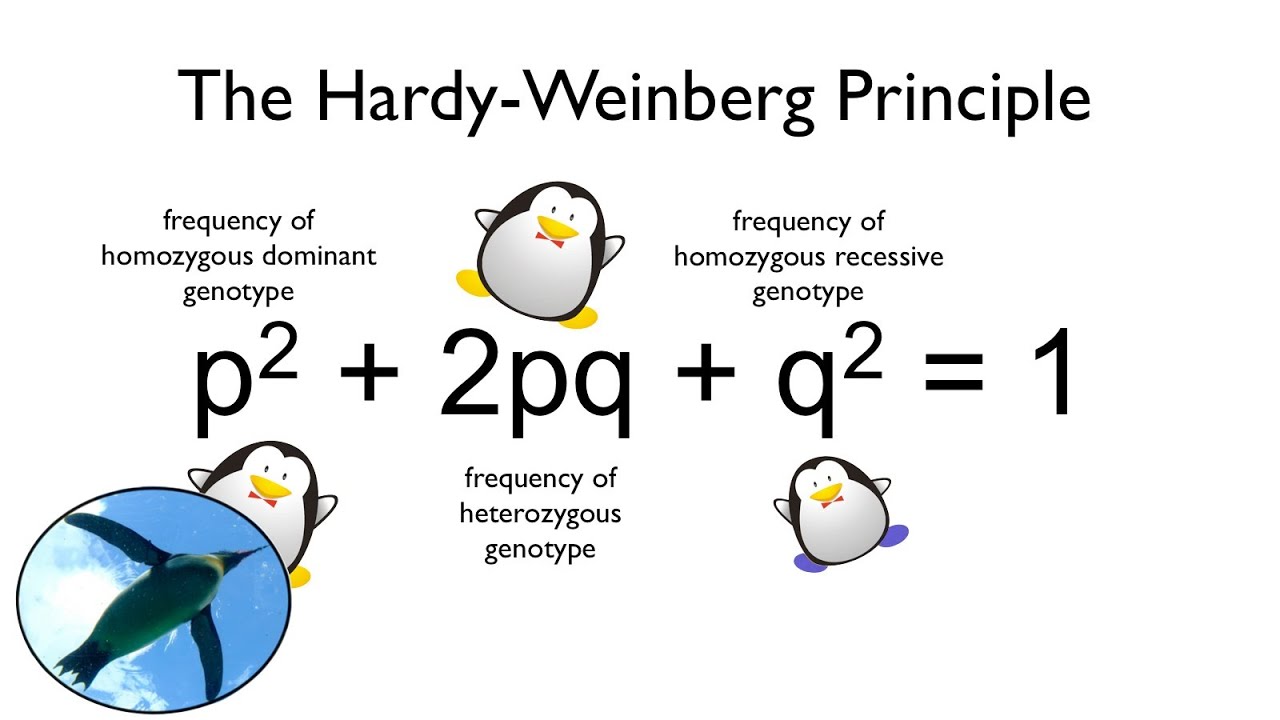
This week in biology we finished the Hardy-Weinberg population genetics lab and started our plant lab on artificial selection. The main focus of the week was speciation.
LECTURE: SPECIATION
Species: Members who interbreed and make viable offspring
Morphological: based on appearance
Ecology: based on niche
Paleological: based on fossils
Allopatric: Geographic barriers
Sympatric: Same area where species evolve for each other
REFLECTION
Related to big idea number 1
The process of evolution drives the diversity and unity of life.
Speciation and extinction have occurred throughout the Earth’s history, speciation may occur when two populations become reproductively isolated from each other, and populations of organisms continue to evolve.
Speciation happens in nature, but scientists aren’t exactly sure how.
The idea of slow change over time is more excepted than the idea of rapid change followed by long periods of no change.
This week in AP Biology we learned more about evolution, the common ancestry of life, and hypothesis on molecular origins of life.
Evolution
Chapter 9 taught us about evolution, variation, and natural selection. We also learned about different evolution theories besides natural selection such as how individuals do not evolve, populations do. We touched on convergent evolution, which is a similar problem, similar solution.
It makes me wonder if a single population can solve a “problem” with multiple different adaptations? We dug deeper into Darwin’s life, and learned how he came from a wealthy family and went on a voyage around the world and studied different organisms. Through the Galapagos Island, Darwin discovered natural selection. However, he didn’t publish this theory for twenty years because Alfred Russel Wallace sent a paper to him with the same theory for Darwin to review. Darwin quickly published his theory before Wallace could get credit first. He also wrote The Origin of Species.
Common Ancestry of Life
Finally, the lecture taught us that there was a common ancestry of life. This was very interesting to me and hard to wrap my head around. We all come from 1 ancestor, kind of like a family tree. This makes me question how scientist came to this conclusion and what exactly that common ancestor is and where it came from. Did it come from a bacteria?
Hypothesis on Molecular Origins of Life
First there is the Metabolism-First Hypothesis. This consists of several different hypothesis proposed by different researchers about how life first formed. These hypotheses are united by the idea that ordered chemical reactions was the property of the initial life form. Then, there is the Replication First Hypothesis. This is the belief that the first life was a self replicating DNA. This makes me wonder how RNA could replicate and store.
Everything we have learned this week is connected to Big Idea 1, talking about common ancestry, the hypotheses for the origin of life, and the continuation of evolution.
This week in AP Biology we began by refreshing our memory on basic statistics such as calculating the standard deviation and standard error of mean. We also covered evolution and learned about how this occurs in real life, as well as natural selection and key people who paved these ideas.
Descriptive statistics helps me describe basic features in given data, and how to summarize data. The standard deviation is a measure of the variation within data, and we learned how to calculate this. We also learned how to calculate the statistical mean, which is the average that is used to derive the central tendency of the data in a question. We used these ways of calculation on data from the Galapagos finches to practice the formulas. This was helpful in order to refresh my memory on statistics which I took last year, and also how it relates to biology.
The definition of evolution is descent without modification. It is the study of how organisms change over time. Scientists who helped develop ideas such as life evolving, inheriting traits, and carrying capasities include Thomas Malthus, Charles Lyell, Jean Baptiste Lamarck, and Alfred Russel Wallace. It wasn’t until Charles Darwin, however, that natural selection was discovered. Charles Darwin was a scientist who led this new idea of evolution through his work with the Galapagos finches. He published The Origin of Species which explains the changes of beaks of finches over time through natural selection. Because of a drought on one of the islands, the tiny seeds disappeared and so birds with small beaks died off for they couldn’t eat the big seeds. Thus, more birds began to have larger beaks. When the fit animal survives, it reproduces and passes on its traits to its offspring.
The Rock Pocket Mice video was a good example for me to understand natural selection. I learned how mice evolved in oder to survive their respective climates. When the lighter mice lived on the darker rock, they were easily seen by predators and died off. Then the few mice that mutated to have darker fur survived more because they were able to blend in with their surroundings. They survived, and reproduced more darker mice.
In conclusion, this week I learned about evolution, natural selection, and statistics. I used this knowledge on examples such as Galapagos finches and Rock Pocket mice. I learned how this connects to Big Idea 1, that the process of evolution drives the diversity and the unity of life. Without natural selections, many species wouldn’t be alive today. Next week I hope to dive deeper into speciation and how a new species form.
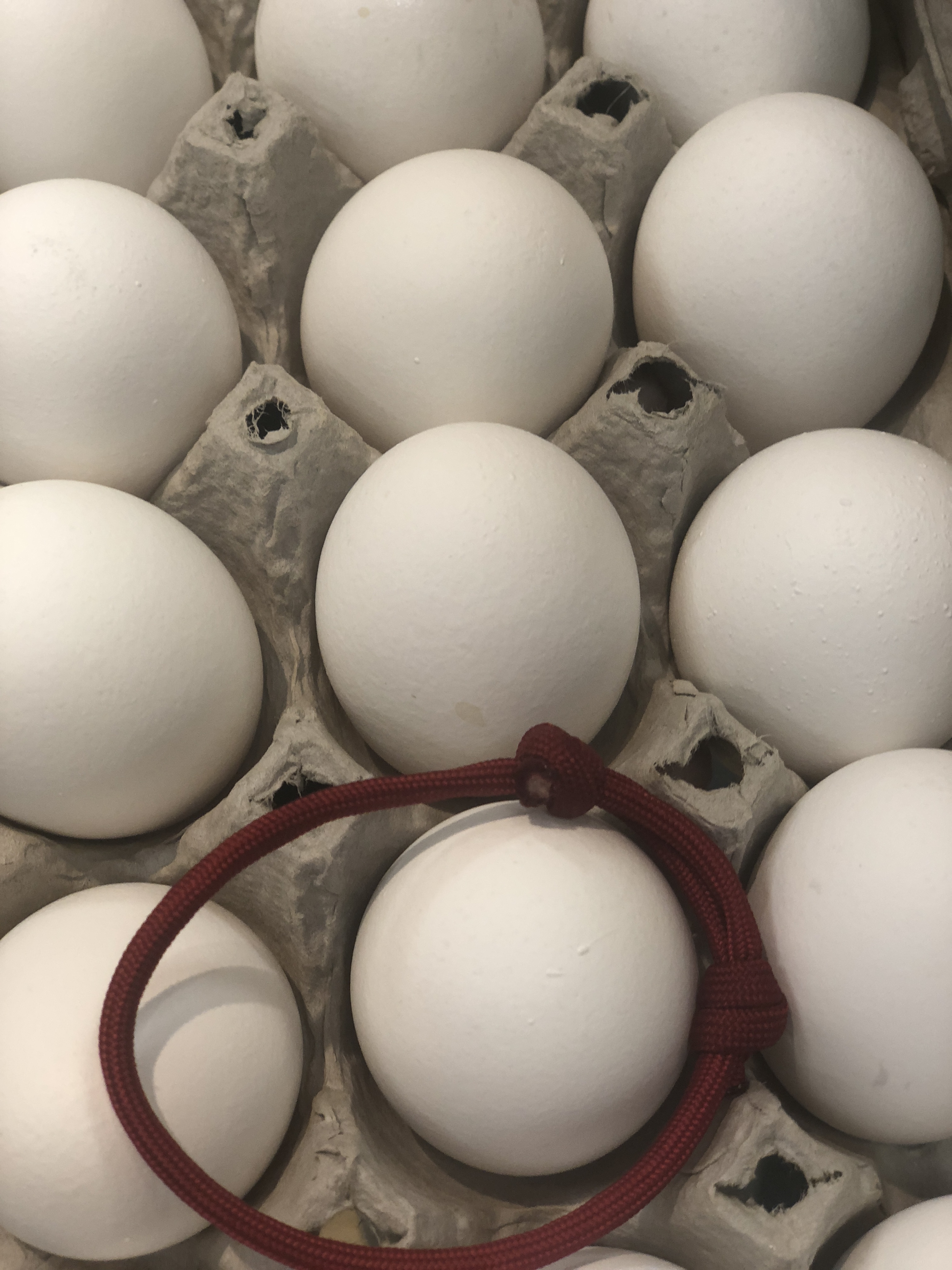
Amniotic eggs are produced by birds, reptiles, and other egg laying mammals. In amniotic eggs, the embryo develops inside the amnion and the shell of the egg is either calcium-based or leathery. The embryo of the egg is typically joined with a yolk sac.
Fibrous carbohydrates can not be broken down into sugars and digested, unlike many other carbohydrates. Most fibrous carbohydrates are found in vegetables, such as the tomato.










 AP Biology