
This week in AP bio we learned about measuring evolution and the Hardy-Weinberg theorem.
Lecture: Measuring Evolution
- Populations evolve, not individuals
- Individuals are selected
- The genetic makeup changes
- Fitness increases
- Variation
- An organism has to be more fit than another in order for natural selection to take place.
- Comes from mutations and sex
- Mutation= random changes in the DNA
- Sex= Mixing genes – new arrangements
- Terminology
- Gene= Determines a trait
- Allele= A variation of a gene
- Sexually produced organisms have two alleles
- Dominant = The showing trait
- Recessive = Only shows trait if both alleles are recessive
- Sexually produced organisms have two alleles
- New Terminology
- Homozygous= An individual who has two copies of the same allele
- Heterozygous= Any individual who has one copy of dominant and onerecessive
- Population= A local group of interbreeding individuals
- Gene Pool= A collection of alleles in the population
- Evolution= Change in allele frequency in population
- Five Sources of Evolution
- Mutation
- Gene Flow
- Movement of alleles and their alleles
- Wind with seeds
- Migration of animals
- Reduces differences between populations
- Modern Travel of humans
- Movement of alleles and their alleles
- Nonrandom mating
- Sexual selection
- Genetic Drift
- Chance events
- Reduces variability
- Founder effect, Bottleneck
- Natural Selection
A good visual for Gene Flow:

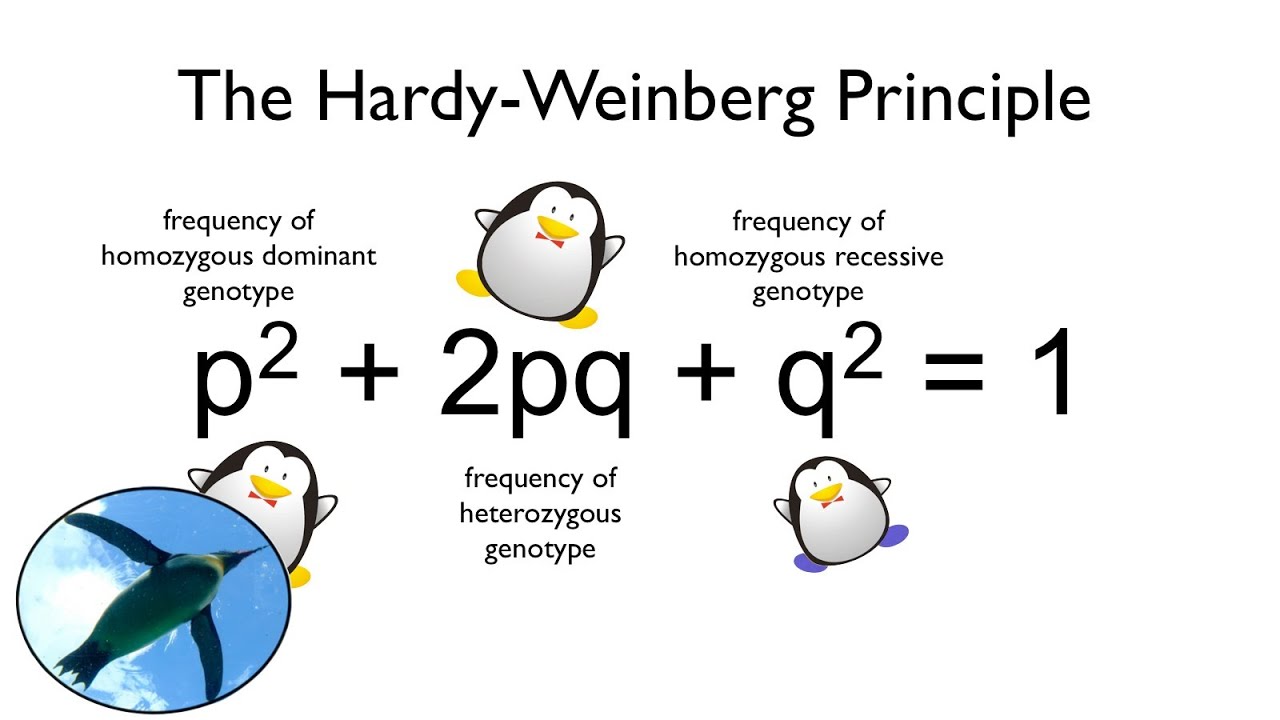
Hardy- Weinberg Theorem
p² + 2pq + q²
- p² = BB
- 2pq= Bb
- q² – = bb
Solving steps
- Write down both equations
- Identify any given information
- Don’t mess up squaring decimals
- Figure out q² or q
- Work your way around the problem
QUESTIONS
- In what real-world situations is the theorem used?
- What would cause allele frequencies to not change?
Sources:
https://www.khanacademy.org/science/biology/her/heredity-and-genetics/v/hardy-weinberg
 AP Biology
Leave a comment